.jpg)
During April-February, the index of industrial production, a measure of factory activity, declined 0.1 per cent compared with a 0.9 per cent growth in the corresponding period of 2012-13.

Returns for income earned till FY12-13 can be filed till March 31.
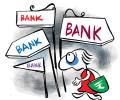
'One way of doing this could be offering credit guarantee to the banks, say 10 per cent, for fresh loans given to micro, small and medium enterprises,' observes Tamal Bandyopadhyay.
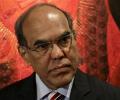
Subbarao said, short-term as well as medium-term prospects or Indian economy continue to be grim. Fiscal deficit is going to be much higher, the debt burden much larger and the financial sector will be in a worse shape.

Enjoying the backing of the regulator, Gill has identified the core problems, ring-fenced the banks from "influencers" and is in the process of building a new team. Now, he needs to play a Vikram Pandit for YES Bank, says Tamal Bandyopadhyay.

However, the Indian economy is expected to bounce back in 2021, the World Bank said.
.jpg)
The benchmark has gained 2 per cent this week on continued hopes the incoming Narendra Modi government would unveil substantial economic reforms.

The new numbers did not apparently pass consistency checks with production, inputs, or movements in the National Stock Exchange.
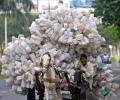
In India we have to be careful not to copy any level of dependence on the financial sector and infatuation with the get-rich-quick syndrome, says Jaimini Bhagwati.
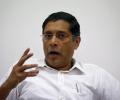
Chief Economic Advisor Arvind Subramanian says that he hopes GDP growth will be at the upper end of the 7-7.5 per cent range.

A provision of Rs 15,000 crore has been made in the budgetary estimate of 2016-17 towards interest subvention.
Andhra Pradesh now comes third in ease of doing business.
'The experience so far is a shocking example of how critical scheme of national importance can be brought into disrepute by inefficient and badly designed implementation,' says Dr Madhav Godbole, the former Union home secretary.

Generation, a youth employment non-profit, is empowering young people to build thriving, sustainable careers. It also provides employers the highly skilled, motivated talent they need.
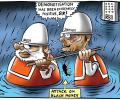
'It is common knowledge that cash is anonymous.' 'When demonetisation was implemented, one of the intended objectives was to put identity on the cash holdings in the economy.' 'With the return of Rs 15.28 lakh crore in the formal banking system, the almost entire cash holding of the economy now has an address.' 'It is no more anonymous,' says Arun Jaitley.

A K Bhattacharya digs into the yet-to-be-public report on ways to curb black money and finds out that Modi's next moves could include action on dabba trading, hawala, and education.

'The number of deaths attributable to warming is likely to rise in the future.'

After helping the government in policymaking since October 2014, Chief Economic Adviser Arvind Subramanian is returning to academics and will be teaching at Harvard Kennedy School on a visiting position. In an interview to Dilasha Seth and Somesh Jha, he says the ease of doing business agenda needs to move forward and India must try to integrate with the global value chains. Edited excerpts.

The farming community expects much more substance from the government, Ajay Vir Jakhar.

Indian economy about to take-off

Fiscal discipline has been maintained but toxic assets worth Rs 7 crore are a massive headache

Hence, the claims by the Government that this will end the menace of black money and corruption are simply outlandish. Also, the simultaneous introduction of Rs 2,000 note undermines their claim and it simply does not fit the storyline of an attack on black money and corruption.

The Budget sets out a comprehensive vision.

By castigating the reforms themselves because of the remediable and reversible defaults here and there in carrying them out, Yashwant Sinha is throwing out the baby along with the bath water, says B S Raghavan.

I-T lens on current account deposits over Rs 12.5 lakh. All the news and more post demonetisation.

Cashi Crisis: Day 9: Aaj ki Taaza Khabar!

Nitin Gadkari has seven portfolios, but does not seem weighed down at all by the many things on his plate. The minister is brimming with ideas...

Harassment, corruption and the burden of compound interest for years are also the reasons.

Imagine being a part of a country, but being discriminated against by the majority community and atrocities being committed against you by the state. This is the deplorable conditions that the Rohingyas of Myanmar live in where they are cut off from their livelihoods and sources of income, unable to access markets, hospitals and schools, and have little or no access to relief aid. In order to understand the situation and the genesis of the tragedy unfolding, Rediff.com's Archana Masih speaks to Ambassador Vijay Nambiar, the United Nations' Chef de Cabinet (Chief of Staff), who had served a long stint with the UN in New York on the issue.
 © 2026 Rediff.com - Advertise with us - Disclaimer - Privacy Policy - Sitemap - Feedback - About us - Terms of use - Grievances